Dog Lump Testing and Lump Removal for Dogs in Essex
Finding a lump or bump on your dog is always worrying. Whether it’s a pea-sized lump under your dog’s skin, a soft fatty lump on their side, or a fast-growing mass, it’s important to get it checked. At Ivy Lodge Veterinary Clinic in Brentwood, Essex, we offer thorough dog lump testing and lump removal to investigate what the lump is and discuss the safest treatment options for your pet.
Many owners search online for things like “dog lump under skin that moves”, “fatty tumours in dogs”, or “sudden lumps on dog under skin”. While online information can be confusing or alarming, a proper examination by a vet is the only way to know what’s really going on.
Why You Should Get Dog Lumps and Bumps Checked
Dogs develop lumps and bumps for many reasons. Some are harmless, like benign fatty lumps (lipomas) or small cysts, while others can be more serious, including cancerous tumours. Because it’s impossible to tell just by looking and feeling, every new lump or bump should be checked by a vet.
You should book an appointment if:
- You find any new lump, bump or mass on your dog
- A lump is growing quickly or changing shape
- The lump feels very hard, fixed or irregular
- There are multiple lumps or your dog seems covered in bumps
- The skin over the lump is red, sore, ulcerated or bleeding
- Your dog is licking, scratching or chewing at the area
- The lump is in a sensitive area, such as the armpits, groin, ear, mouth, chest or belly
- Your dog seems unwell, off food, losing weight or low in energy
If you’ve thought “my dog has lumps under her fur” or “my dog is covered in bumps”, it’s always safer to let us take a look.
Common Types of Dog Lumps and Bumps We See
There are many different types of skin lumps, bumps and masses on dogs. Some of the more common ones we see at Ivy Lodge Vets include:
Fatty Lumps (Lipomas)
Soft, squishy fatty lumps in dogs often sit just under the skin and may move slightly when you touch them. These are usually benign (non-cancerous) but can grow larger over time or appear in tricky places like the armpits, groin or chest where they interfere with movement. In these cases, lump removal surgery may be recommended.
Cysts and Skin Bumps
We frequently see cysts in dogs’ skin, including:
- Small bumps under the skin
- Pimple-like bumps on the belly or chin
- Fluid-filled or waxy cysts on the ears, paws or legs
Cysts can sometimes burst or become infected, leading to red bumps on the skin, scabs and soreness. While some can be monitored, others may be better removed, especially if they keep coming back or bothering your dog.
Warts and Skin Tags
Older dogs often develop wart-like growths or small skin tags. These can appear on the head, neck, ears, chest, legs or belly. Most of these are harmless but they can catch on collars or get licked and irritated. If they’re frequently bleeding or infected, we may suggest removing them.
Potentially Cancerous Lumps and Tumours
Some lumps can be cancerous dog lumps, such as mast cell tumours or other skin cancers. These may:
- Grow quickly
- Change colour
- Be red, black or darker than the surrounding skin
- Ulcerate, bleed or scab
- Be painful to touch
This is why testing dog lumps is so important. If we’re concerned about a lump, we’ll recommend further investigation straight away.
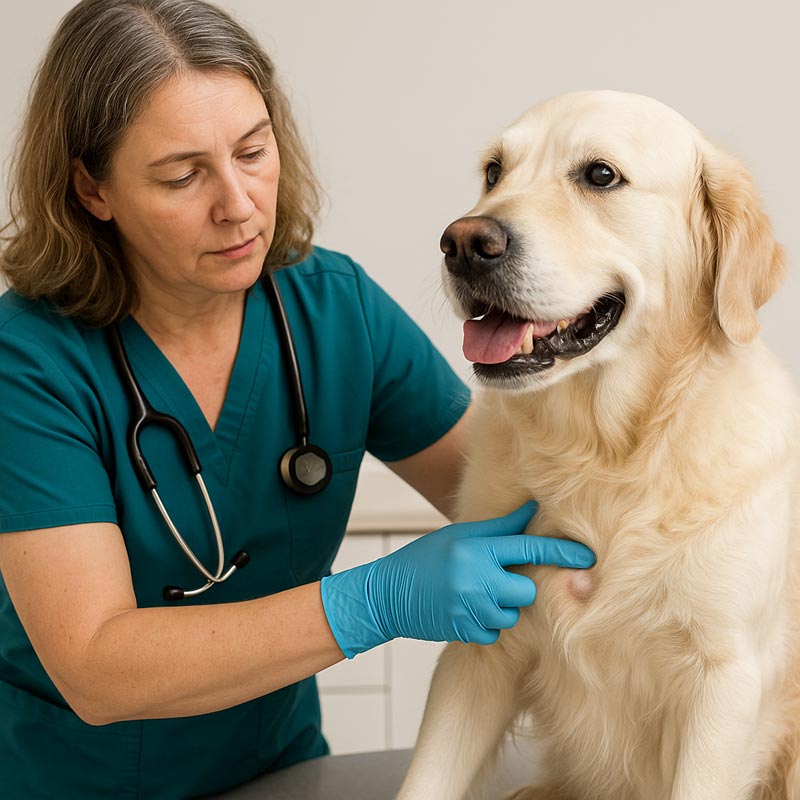
How We Investigate Dog Lumps at Ivy Lodge Vets
Every dog is different and so is every lump. When you bring your dog in for a lump check appointment, we usually follow a step-by-step approach:
1. Full Clinical Examination
We start with a gentle, nose-to-tail physical examination and a detailed history:
- How long the lump has been there
- Whether it has grown or changed
- If it’s causing any pain, lameness or behaviour changes
- Whether there are other lumps, bumps or skin problems
We may measure and photograph the lump so we can monitor changes over time.
2. Fine Needle Aspiration (FNA) and Cytology
In many cases, the next step is to take a sample of cells from the lump using a very fine needle. This is called a fine needle aspiration. Most dogs tolerate this very well and it is often done during the consultation without sedation.
The sample is then examined under a microscope (either in-house or at an external laboratory) to help determine whether the lump is likely to be:
- Benign (e.g. fatty lump, cyst)
- Inflammatory or infected
- Suspicious or cancerous
Based on this information, we can advise you whether monitoring, medical treatment or surgical lump removal is the best option.
3. Biopsy or Further Testing
In some cases, especially with complex or deep-seated lumps (for example in the chest, belly or muscle), we may recommend:
- Biopsy (taking a small tissue sample)
- Blood tests
- Imaging, such as X-rays or ultrasound
This helps us understand the full picture and to plan safe treatment.
Dog Lump Removal Surgery (Mass Removal)
If your dog’s lump needs to be removed, Ivy Lodge Vets can perform dog lump removal surgery (mass removal) under general anaesthetic.
Planning the Surgery
We’ll discuss:
- The type and location of the lump
- How extensive the surgery needs to be
- Any additional checks needed before anaesthesia (e.g. blood tests)
- Whether the lump should be sent to the lab for histology (detailed analysis)
You’ll have time to ask questions so you feel comfortable with the plan.
On the Day of Surgery
On the day of your dog’s lump removal:
- Your dog will be admitted by one of our friendly nurses
- We’ll place them on a comfortable bed in our dog ward
- They’ll receive a general anaesthetic and strong pain relief
- The lump will be carefully removed and the wound stitched closed
- Where appropriate, the lump will be sent to a laboratory so we can confirm exactly what it was and whether further treatment is needed
We closely monitor your dog’s heart rate, breathing and comfort throughout the procedure using modern equipment and trained veterinary nurses.
Aftercare and Recovery
After surgery, we’ll give you detailed home care instructions, which may include:
- Rest and restricted exercise
- A buster collar or medical shirt to stop licking the wound
- Pain relief and any other prescribed medication
- A follow-up appointment for wound checks and stitch removal
Most dogs recover very quickly from lump removal surgery, and many owners are relieved to have the lump removed and tested.
Dog Lump Removal Prices
Ivy Lodge Veterinary Clinic offers transparent pricing for many lump (mass) removals. Prices vary depending on the size and location of the lump and the complexity of the surgery.
| MASS REMOVALS | |
|---|---|
| Mass Removal < 2cm | *£180.00 |
| Mass Removal 2cm – 5cm | *£300.00 |
| Mass Removal 5cm – 10cm | *£420.00 |
| Mass Removal > 10cm | *£540.00 |
* Mass Removal prices do not include General Anaesthesia
General Anesthesia Prices
| SERVICE | PRICE |
|---|---|
| General Anaesthesia – DOG < 10kg | £220.00 |
| General Anaesthesia – DOG 10kg – 20kg | £242.00 |
| General Anaesthesia – DOG 20kg – 40kg | £264.00 |
| General Anaesthesia – DOG 40+kg | £286.00 |
| General Anaesthesia – Additional Per Hour General Anaesthesia prices are for a General Anaesthetic up to 1.5 hour duration then additional time is charged. |
£50.00 |
If you’d like an accurate estimate for your dog’s lump removal surgery, our team will be happy to provide a written estimate after a clinical examination.
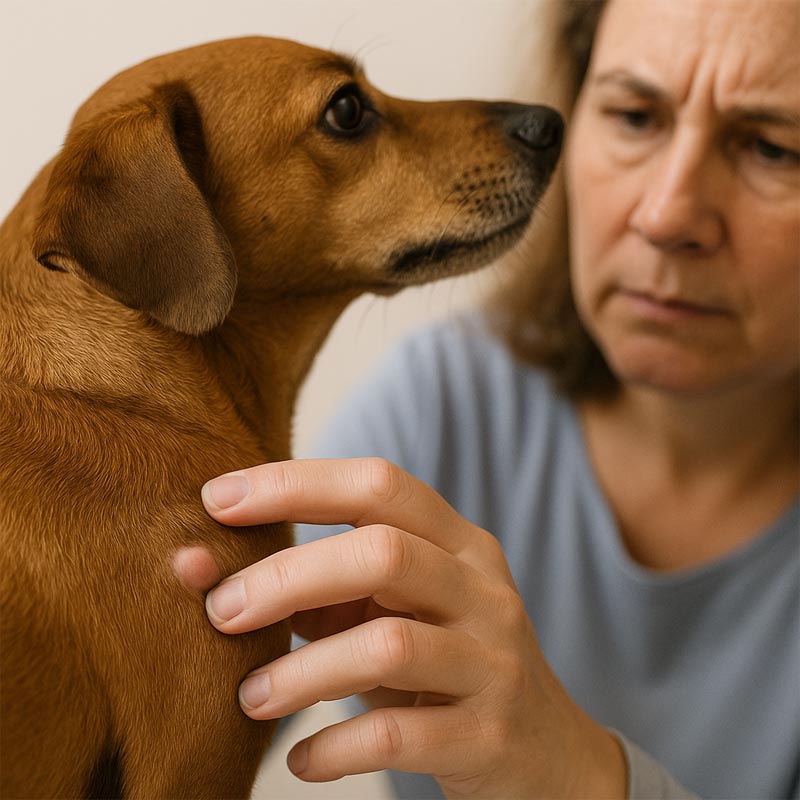
When Dog Lumps Need Urgent Attention
Please contact us as soon as possible if you notice:
- A lump that is suddenly larger or growing very quickly
- A big red, black or bleeding lump
- A lump that is painful, hot or oozing
- Multiple new lumps appearing over a short time
- Lumps combined with other signs like weight loss, reduced appetite, vomiting or tiredness
- A bulge or lump in the belly, groin or armpit that looks like it’s pushing outwards
If you’re unsure whether it’s an emergency, please phone us – we’d rather you call and it be nothing serious than wait and worry.
Book a Dog Lump Check at Ivy Lodge Vets
If you’ve been typing searches like “lump on my dog’s neck”, “bump on dogs leg”, “sudden lumps on dog under skin” or “big lump on dog’s back”, the next step is to let us examine your dog in person.
Contact Us Today
We’ll arrange a convenient appointment, discuss your concerns in detail and create a tailored plan to investigate and, where appropriate, remove your dog’s lump safely and comfortably.