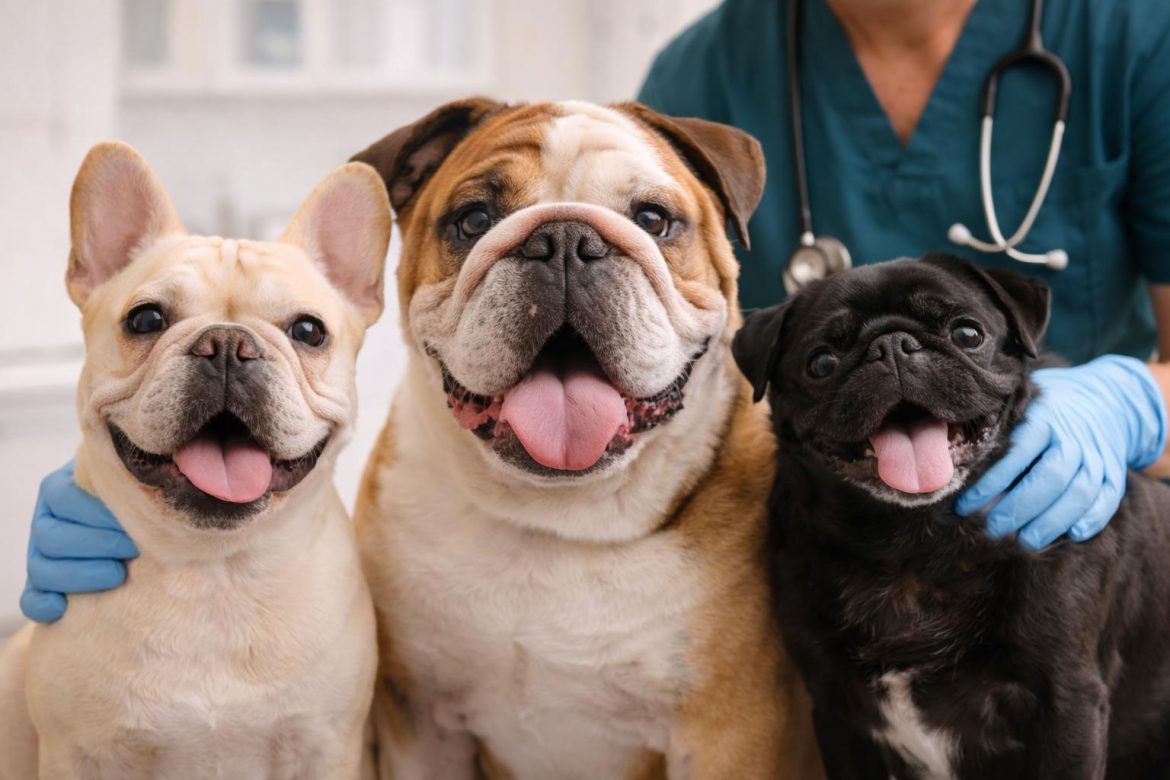

Could Your Flat-Faced Dog Have BOAS?
Flat-faced dogs such as French Bulldogs, Pugs and English Bulldogs are loved for their character and appearance, but their facial shape can also make breathing more difficult. Many owners notice snoring, noisy breathing or poor tolerance to exercise, but do not always realise these can be signs of an airway condition called BOAS. In this guide, we explain what BOAS is, which signs to look out for, and when it may be time to seek veterinary advice.
What is BOAS?
BOAS stands for Brachycephalic Obstructive Airway Syndrome. It affects flat-faced breeds where the shape of the skull and airway tissues can make it harder for air to move normally through the nose, throat and upper airway.
At Ivy Lodge Vets, BOAS is described as a common condition affecting breeds such as French Bulldogs, English Bulldogs, Pugs and Boston Terriers, and surgery may be recommended where breathing is significantly affected.
Which dogs are most at risk?
BOAS is most often seen in brachycephalic breeds, which are dogs with shortened skulls and flat faces. Some dogs are mildly affected, while others may struggle more noticeably during exercise, excitement or warm weather.
Breeds commonly affected include
- French Bulldogs
- Pugs
- English Bulldogs
- Boston Terriers
- Other flat-faced breeds
What signs should owners look out for?
Many BOAS symptoms are easy to dismiss because some flat-faced dogs have always sounded noisy when breathing. However, regular airway noise and breathing difficulty should not be seen as normal.
Common signs of BOAS
- Noisy breathing
- Loud snoring
- Panting excessively
- Tiring easily on walks
- Struggling in warm weather
- Breathing with effort after excitement
- Gagging or retching
Why is early assessment important?
BOAS can affect comfort, exercise ability and overall quality of life. In more serious cases, dogs can become distressed in hot weather or after excitement because breathing takes more effort than it should.
Ivy Lodge’s BOAS page highlights that early assessment can make a significant difference to a dog’s comfort and long-term health.
Can BOAS surgery help?
For suitable dogs, BOAS surgery may help improve airflow, reduce breathing effort and make daily life more comfortable. Ivy Lodge states that potential benefits can include easier breathing, better exercise tolerance, improved ability to cope with warm weather and reduced risk of breathing-related emergencies.
The most suitable treatment will depend on a full clinical assessment and how severely your dog is affected.
When should you speak to a vet?
If your dog snores heavily, pants excessively, struggles after exercise or seems uncomfortable in warm weather, it is worth booking an assessment. Even if the signs seem familiar, they may still suggest your dog is having to work harder to breathe than they should.
Need more information about BOAS in dogs?
At Ivy Lodge Vets, we assess and treat dogs affected by BOAS and can advise whether surgery may help improve breathing and comfort.
Read more about our BOAS surgery service
Contact Ivy Lodge Vets or call 01708 373 671.