
What Is BOAS in Dogs?
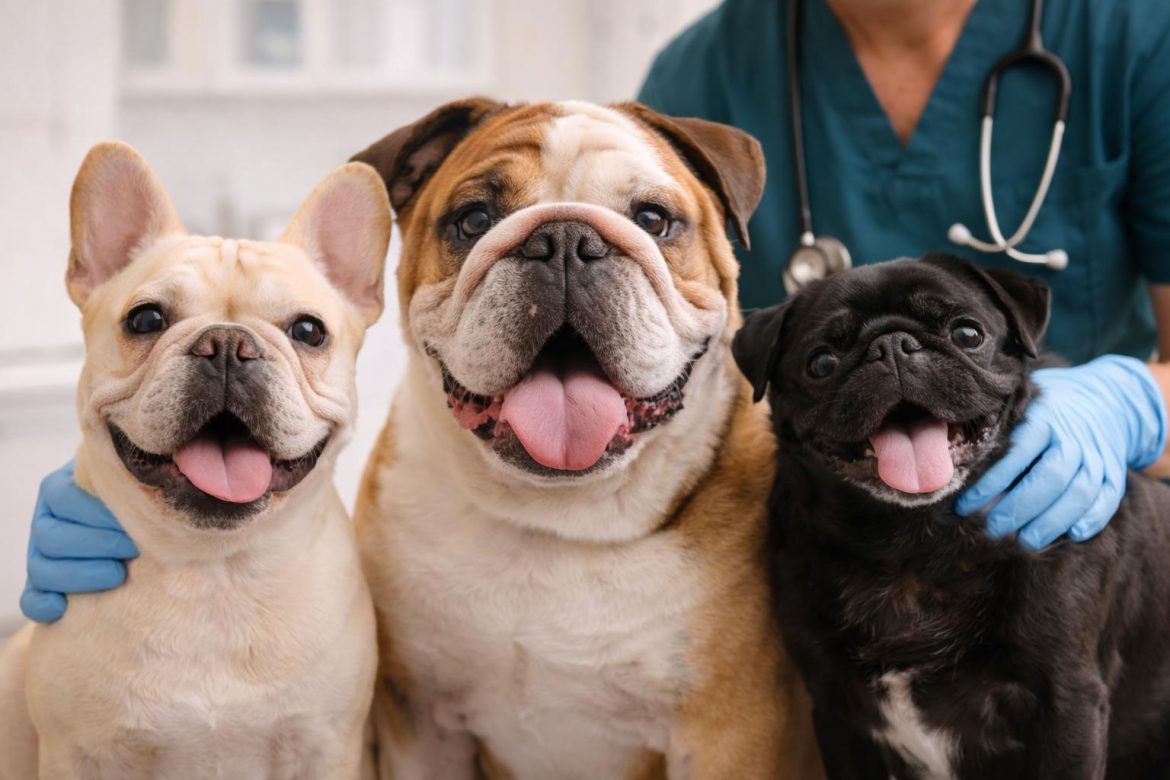
BOAS is a common condition affecting flat-faced dog breeds such as French Bulldogs, Pugs and English Bulldogs. Many owners notice noisy breathing, snoring, exercise intolerance or difficulty coping in warm weather, but may not realise these signs can point to an underlying airway problem. In this guide, we explain what BOAS is, how it affects dogs, and when surgery may be recommended.
What does BOAS stand for?
BOAS stands for Brachycephalic Obstructive Airway Syndrome. It affects dogs with short noses and flat faces, where the shape of the skull and soft tissues can make normal breathing more difficult.
While these breeds are often loved for their appearance and personality, their facial structure can put them at higher risk of airway obstruction and breathing difficulties.
Which dogs are most likely to be affected by BOAS?
BOAS is most commonly seen in brachycephalic breeds. These are dogs with shortened skulls and flattened faces. Some dogs may show mild signs, while others can struggle significantly with breathing during daily life.
Breeds commonly affected by BOAS
- French Bulldogs
- Pugs
- English Bulldogs
- Boston Terriers
- Shih Tzus
- Other flat-faced breeds
What are the signs of BOAS in dogs?
Many symptoms of BOAS are easy to dismiss at first, especially if a dog has always breathed noisily. However, persistent airway noise, struggling after exercise or difficulty in hot weather are not signs that should be ignored.
Dogs with BOAS may find it harder to cool themselves, exercise normally or settle comfortably, particularly when excited or stressed.
Common symptoms of BOAS
- Noisy breathing
- Snoring when awake or asleep
- Exercise intolerance
- Struggling in warm weather
- Gagging or retching
- Poor sleep or restlessness
- Breathing with increased effort
- Episodes of distress after excitement
Why does BOAS happen?
BOAS happens because the airway structures in flat-faced dogs may be too narrow or crowded for effective airflow. A dog may have narrowed nostrils, an elongated soft palate, or other changes within the airway that make breathing harder than it should be.
Over time, this extra effort to breathe can affect comfort, exercise ability and overall quality of life. In more serious cases, it can increase the risk of breathing crises, particularly during heat or stress.
How is BOAS assessed?
If BOAS is suspected, your dog should have a full veterinary assessment. This helps determine how severely the airway is affected and whether treatment or surgery is likely to help.
Assessment may include discussion of your dog’s symptoms, clinical examination and evaluation of how your dog breathes both at rest and during activity. In some cases, a more detailed airway examination may also be advised.
When is BOAS surgery recommended?
BOAS surgery may be recommended when a dog’s breathing is significantly affected or when symptoms are interfering with normal daily life. The aim of surgery is to improve airflow, reduce breathing effort and help your dog feel more comfortable.
Not every dog will need surgery immediately, but early assessment is important. In some cases, treating airway issues sooner can help improve long-term comfort and reduce ongoing strain on the respiratory system.
What are the benefits of BOAS surgery?
For suitable patients, BOAS surgery can make a significant difference to breathing and day-to-day quality of life. Many owners notice their dog becomes more comfortable, settles better and copes more easily with gentle exercise and warmer conditions.
Possible benefits may include
- Improved airflow
- Reduced breathing noise
- Better tolerance of exercise
- Greater comfort during rest and sleep
- Improved overall quality of life
When should you speak to a vet about BOAS?
If your dog is noisy when breathing, struggles with exercise, pants excessively, or seems distressed in warm weather, it is worth booking an assessment. Even if the signs seem mild, they may still indicate that your dog is working harder to breathe than they should be.
Early advice can help you understand your options and make informed decisions about your dog’s health and comfort.
Need more information about BOAS surgery for your dog?
At Ivy Lodge Vets, we assess and treat dogs affected by Brachycephalic Obstructive Airway Syndrome. If you would like to discuss your dog’s breathing, learn more about BOAS surgery, or arrange an appointment, our team will be happy to help.
Read more about our BOAS surgery service
Contact Ivy Lodge Vets or call 01708 373 671.